Understanding CNAPP

Navigating the complex world of security as a newcomer can be daunting, especially given the vast array of acronyms. As a software engineer who has explored a broad spectrum of technologies, I can confidently say that the security realm might have the most perplexing naming conventions yet. This blog documents my journey to grasp some key security concepts, starting with CNAPP (Cloud-Native Application Protection Platform).
Why CNAPP ?
CNAPP acts as a comprehensive gateway to understanding security frameworks. It's an emerging term that serves as an umbrella for various security tools, offering a streamlined approach to protecting cloud-native applications. This blog aims to provide a clear understanding of what CNAPP is, what it protects, and the main components of CNAPP. Much of this insight is drawn from Gartner's report on CNAPPs, which serves as a valuable resource for understanding this evolving field.
What is CNAPP and what it protects?
CNAPP stands for Cloud-Native Application Protection Platform. Essentially, it is a security platform designed for applications born in the cloud, providing an end-to-end security solution.
Let's break this term down in a visual way.
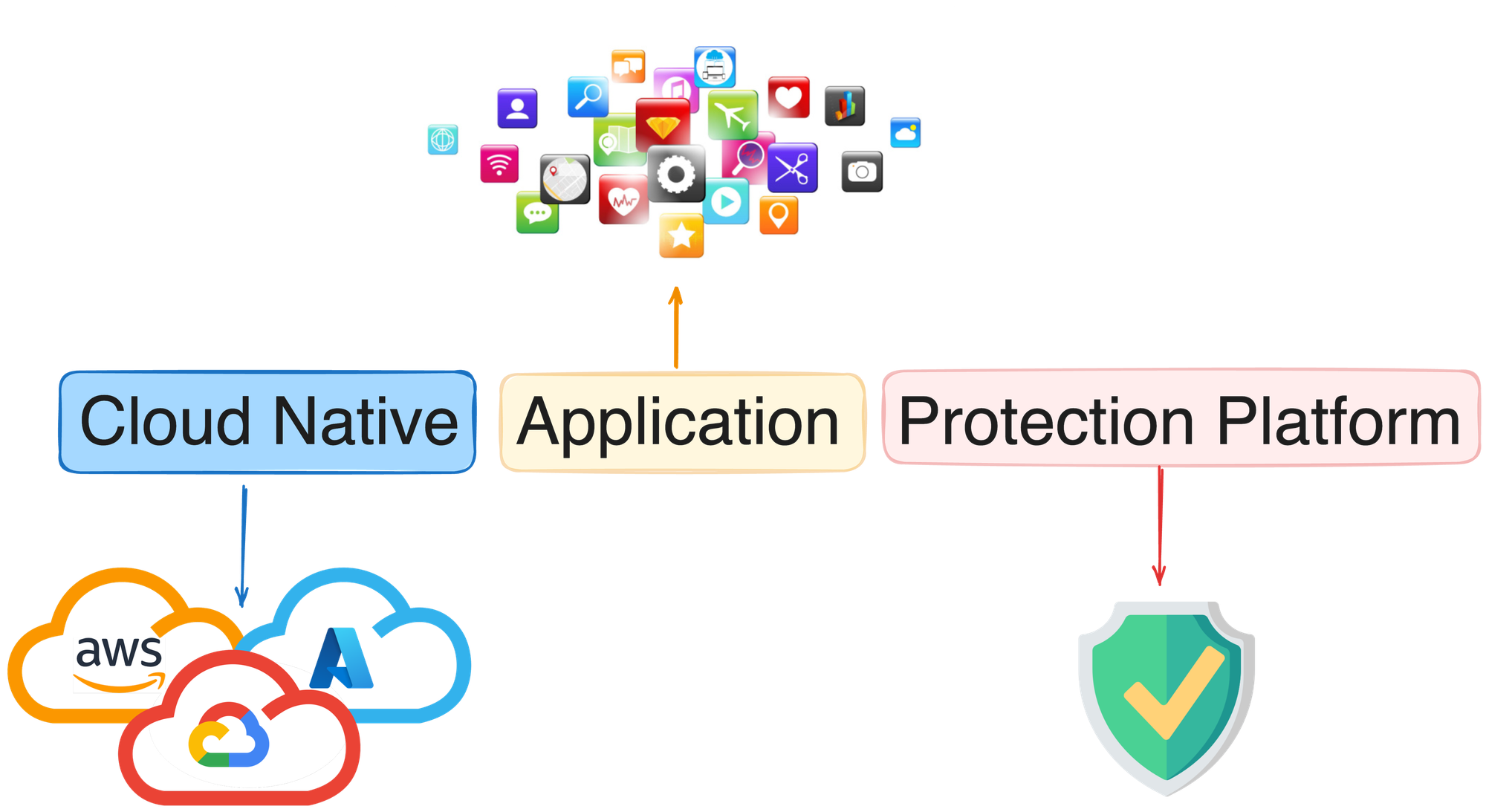
At its core, CNAPP provides comprehensive security for applications. But what exactly is a cloud-native application? Essentially, it encompasses:
- The underlying cloud infrastructure.
- The applications deployed on that infrastructure.
- The related data layer that supports business logic and contains important, business-specific data.
This means a cloud-native application isn't just about the software code itself; it's also about the environment it operates in and the data it processes, all of which require comprehensive security measures.
Main components of CNAPP
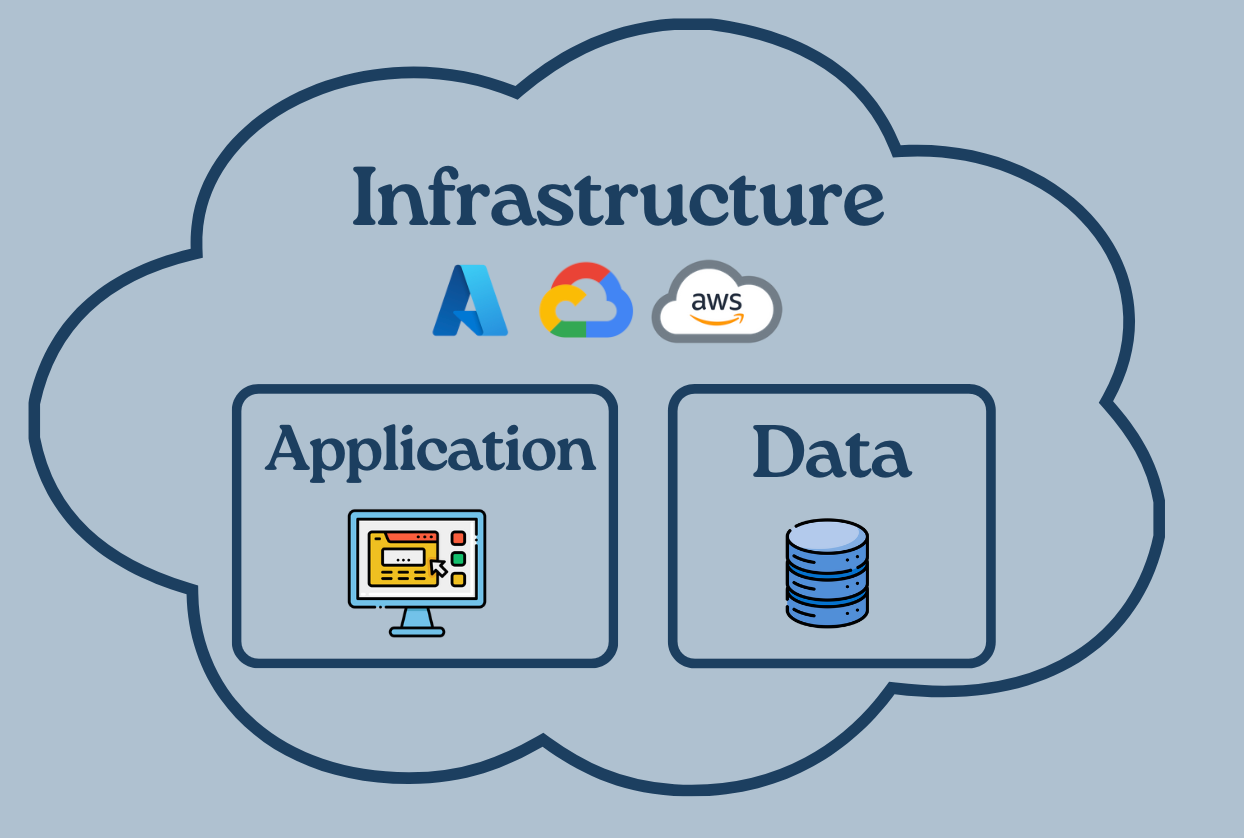
Building upon this understanding, the components of CNAPP each have distinct areas of focus:
- Infrastructure Security: Ensuring the foundational elements are robust and protected.
- Application Security: Safeguarding the software and services deployed on the infrastructure.
- Data Security: Protecting sensitive information and maintaining regulatory standards.
Starting with Infrastructure Security, there are several critical aspects to consider: posture management, workload protection, and access management.
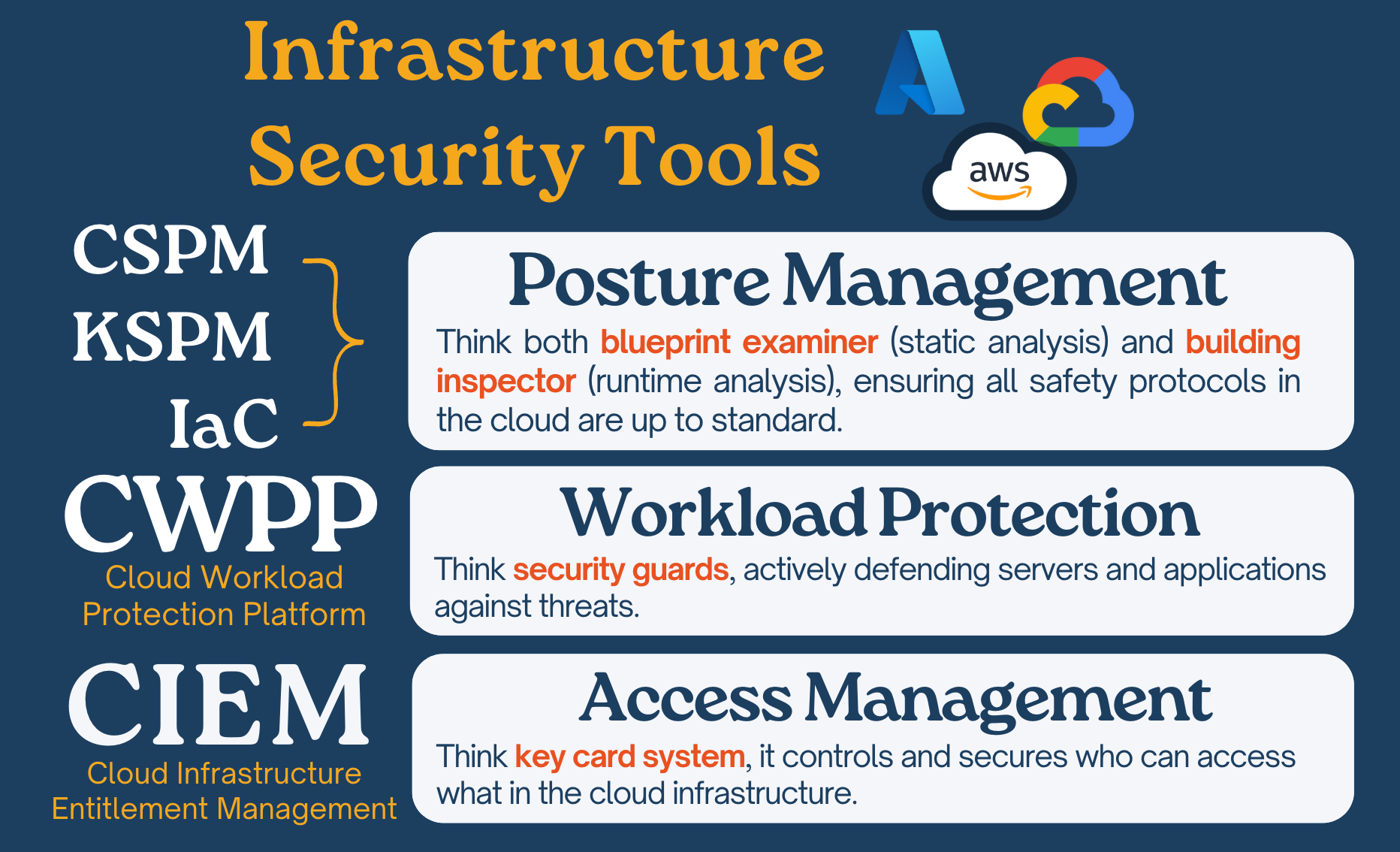
Posture Management involves tools like Infrastructure as Code (IaC) scanning, Cloud Security Posture Management (CSPM), and Kubernetes Security Posture Management (KSPM). Think of IaC scanning as the blueprint examiner, performing static analysis on your infrastructure code before deployment, much like reviewing building plans before construction begins. This static approach ensures your configurations are secure from the outset by identifying and fixing issues early in the development process. In contrast, CSPM and KSPM function as the building inspectors, conducting runtime analysis of your deployed cloud and Kubernetes environments. They continuously monitor your live infrastructure to ensure all safety protocols and configurations are up to standard, detecting misconfigurations, compliance violations, and security risks in real time. By combining static and runtime analysis through IaC scanning, CSPM, and KSPM, organisations can maintain a robust security posture throughout the entire lifecycle of their infrastructure, preventing vulnerabilities before they can be exploited.
Workload Protection is addressed through Cloud Workload Protection (CWP) solutions. Imagine CWP as the security guards actively defending your servers and applications against threats. CWP monitors workloads across various environments (whether on-premises, in the cloud, or in containers) to detect and protect against malware, unauthorised access, and other security threats, ensuring that your applications and data remain secure during operation.
Access Management is managed with tools like Cloud Infrastructure Entitlement Management (CIEM). Think of CIEM as the key card system controlling who can access what within your cloud infrastructure. CIEM focuses on managing identities and permissions, reducing the risk of excessive or misconfigured privileges that could lead to unauthorised access or data breaches. By enforcing the principle of least privilege, CIEM ensures that users have only the access necessary for their roles.
By concentrating on these specific facets of infrastructure security, posture management, workload protection, and access management, organisations can eliminate errors and gaps, collectively fortifying their overall security posture.
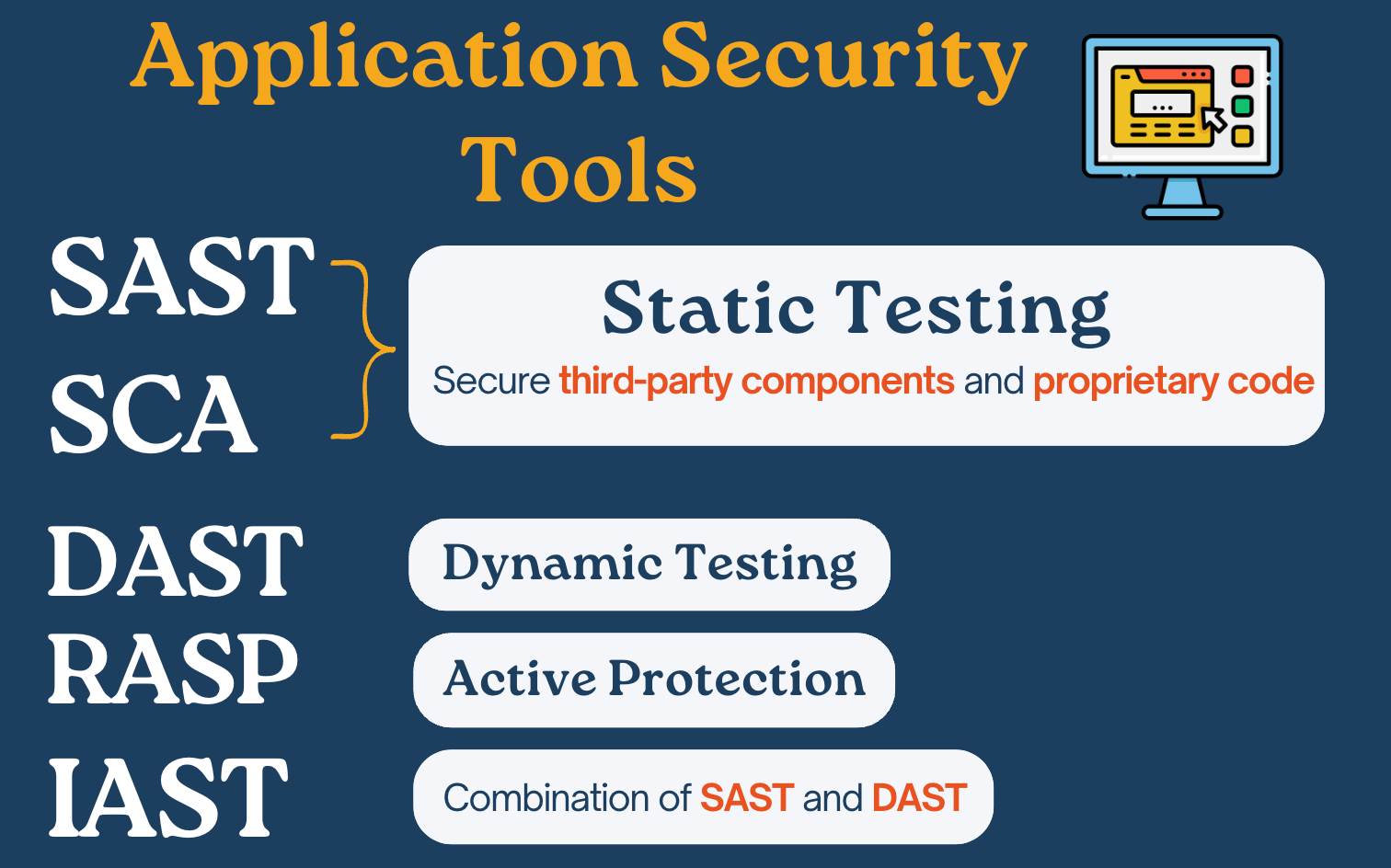
Next up, Application Security is crucial for safeguarding software applications against threats. This involves three main approaches: static testing, dynamic testing, and active protection.
Static testing includes tools like SAST (Static Application Security Testing) and SCA (Software Composition Analysis). SAST analyses the application's proprietary code without executing it, identifying vulnerabilities introduced by developers. SCA focuses on scanning third-party libraries and dependencies for known vulnerabilities and licence compliance issues.
Dynamic testing, on the other hand, evaluates the application while it's running. DAST (Dynamic Application Security Testing) simulates external attacks to assess how the application withstands real-world threats. IAST (Interactive Application Security Testing) combines elements of both static and dynamic analysis by monitoring applications in real time during execution, providing detailed insights into potential vulnerabilities.
For active protection during runtime, RASP (Runtime Application Self-Protection) operates within the application to detect and prevent attacks in real time, effectively allowing the application to protect itself during operation.
By leveraging these tools and methodologies, organisations can comprehensively assess and enhance the security of their applications, protecting both their proprietary code and the third-party components they utilise.
Lastly, for data security aspect of things there is Data Security Posture Management (DSPM). DSPM focuses on the security and compliance of data across all storage environments and usage scenarios within an organisation. It monitors where sensitive data resides, how it is accessed, and who has access to it. Think of DSPM as the data guardian, ensuring that your most valuable information is properly protected, handled according to compliance requirements, and safeguarded against unauthorised access or breaches. By providing visibility into data flows and potential risks, DSPM helps organisations maintain control over their critical information assets.
Thanks for taking the time to visit my tiny corner of the internet and reading through my attempt at simplifying the understanding of things in the security space. Next time, I'll be going through what Gartner considers as essential components of CNAPP and how this space is expected to grow in the next few years.
Lastly, as a fellow security newbie, I'd like to give a shoutout to my Datadog SE teammates for their invaluable reviews, contributions, and guidance. In no particular order: Yuki Matsuzaki, Jonathan Lim, and Sin Ta Poon, you guys rock! 🫶